Start With This Apartment Deep Cleaning Checklist
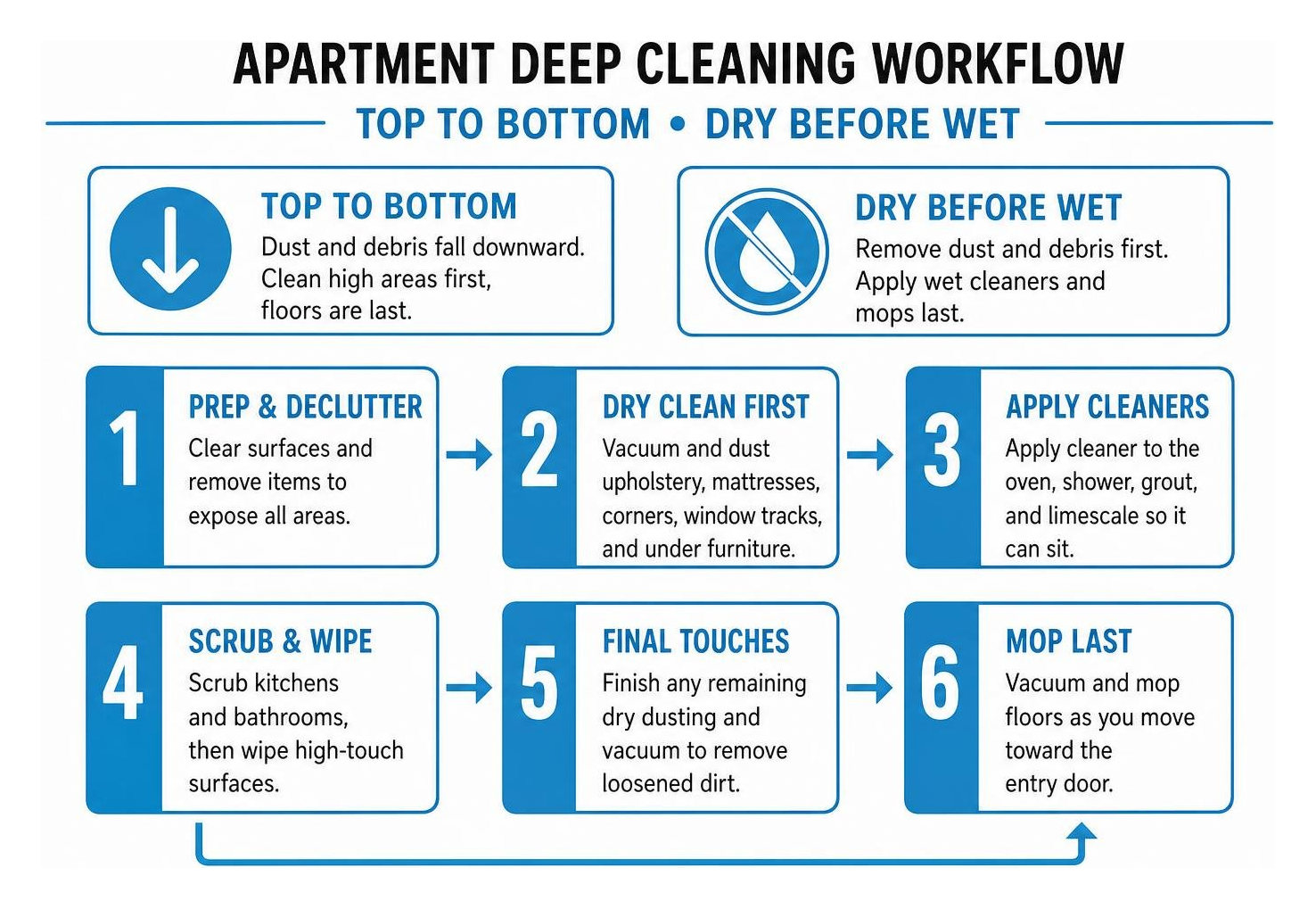
A thorough apartment deep cleaning checklist starts with the places routine cleaning misses. Work one room at a time, clean from high surfaces to floors, and do dry jobs before wet ones.
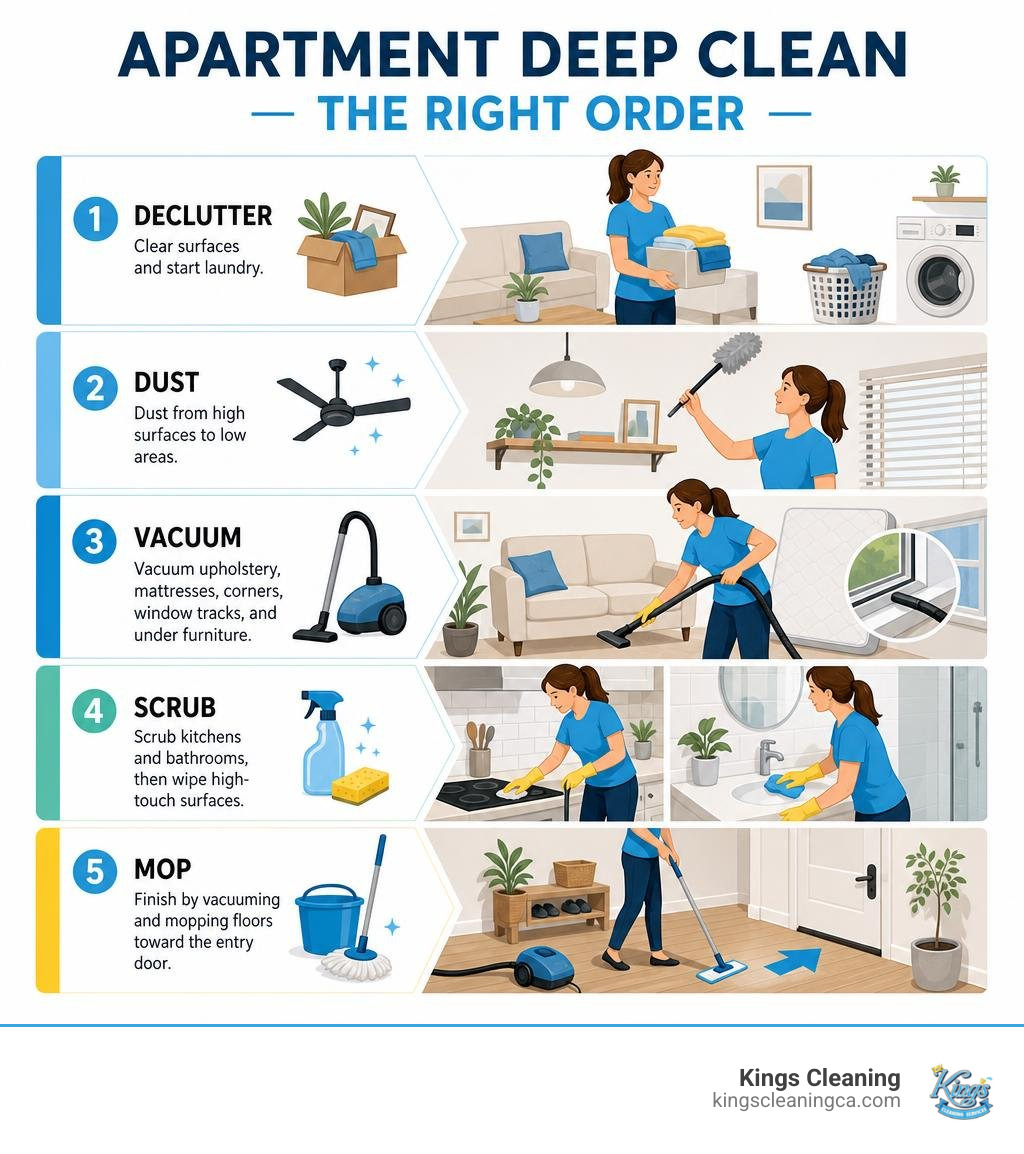
- Declutter surfaces and start laundry.
- Dust ceiling fans, vents, light fixtures, shelves, blinds, and baseboards.
- Vacuum upholstery, mattresses, corners, window tracks, and under furniture.
- Apply cleaner to the oven, shower, grout, and limescale so it can sit.
- Scrub kitchens and bathrooms, then wipe high-touch surfaces.
- Finish by vacuuming and mopping floors as you move toward the entry door.
Deep cleaning is more than wiping counters and taking out trash. It targets built-up grease, soap scum, dust, and hidden debris in spots like refrigerator coils, showerhead nozzles, cabinet tops, exhaust fans, and sliding-door tracks. For most apartments, a full reset every three months helps prevent grime from turning into a much bigger job.
I am Cari King-Nelson, a cleaning-industry business owner with years of experience in service operations and client care. In this apartment deep cleaning checklist, I will help you focus your time on the overlooked details that make an apartment feel truly clean.
Regular Cleaning vs. Deep Cleaning: Workflow, Timing, and Frequency
Regular cleaning is about surface upkeep: taking out the trash, wiping down everyday countertops, sweeping the main walkway, and doing dishes. Deep cleaning goes beneath the surface to remove embedded grease, sanitize unseen touchpoints, dissolve thick limescale, and eliminate settled allergens trapped in air vents or carpet fibers.
When you tackle a full apartment reset, understanding the time commitment helps you plan your day without burning out. Here is how DIY deep cleaning compares to a trained professional crew:
| Apartment Layout | DIY Solo Cleaner Duration | Professional Team Duration (2+ Cleaners) | Recommended Frequency |
|---|---|---|---|
| Studio Apartment | 5–7 hours | 3–4 hours | Every 3–6 months |
| 1-Bedroom Apartment | 7–9 hours | 4–5 hours | Every 3 months (quarterly) |
| 2-Bedroom Apartment | 8–10+ hours (Full day) | 5–7 hours | Every 3 months (quarterly) |
| 3-Bedroom Apartment | 2 full sessions / weekend | 6–8 hours | Every 2–3 months |
To keep your momentum, follow two fundamental cleaning rules:
- Top-to-Bottom Sequence: Dust and debris obey gravity. Always clean ceiling fans, air vents, and high shelves before you clean counters, furniture, and baseboards. Floors are always your very last step.
- Dry Before Wet: Never spray liquid cleaner onto thick dust or pet dander. It creates muddy streaks that take twice as long to wipe away. Vacuum and dust surfaces thoroughly before applying wet cleaners or mops.
Setting up efficient cleaning steps create cleaning schedule routines keeps seasonal grime from piling up into an exhausting marathon.
Essential Supplies, Tools, and Non-Toxic Homemade Solutions
You do not need an entire aisle of harsh chemicals to get a spotless apartment. In fact, a few versatile tools and simple household mixtures handle almost every cleaning challenge.
The Essential Deep Cleaning Toolkit
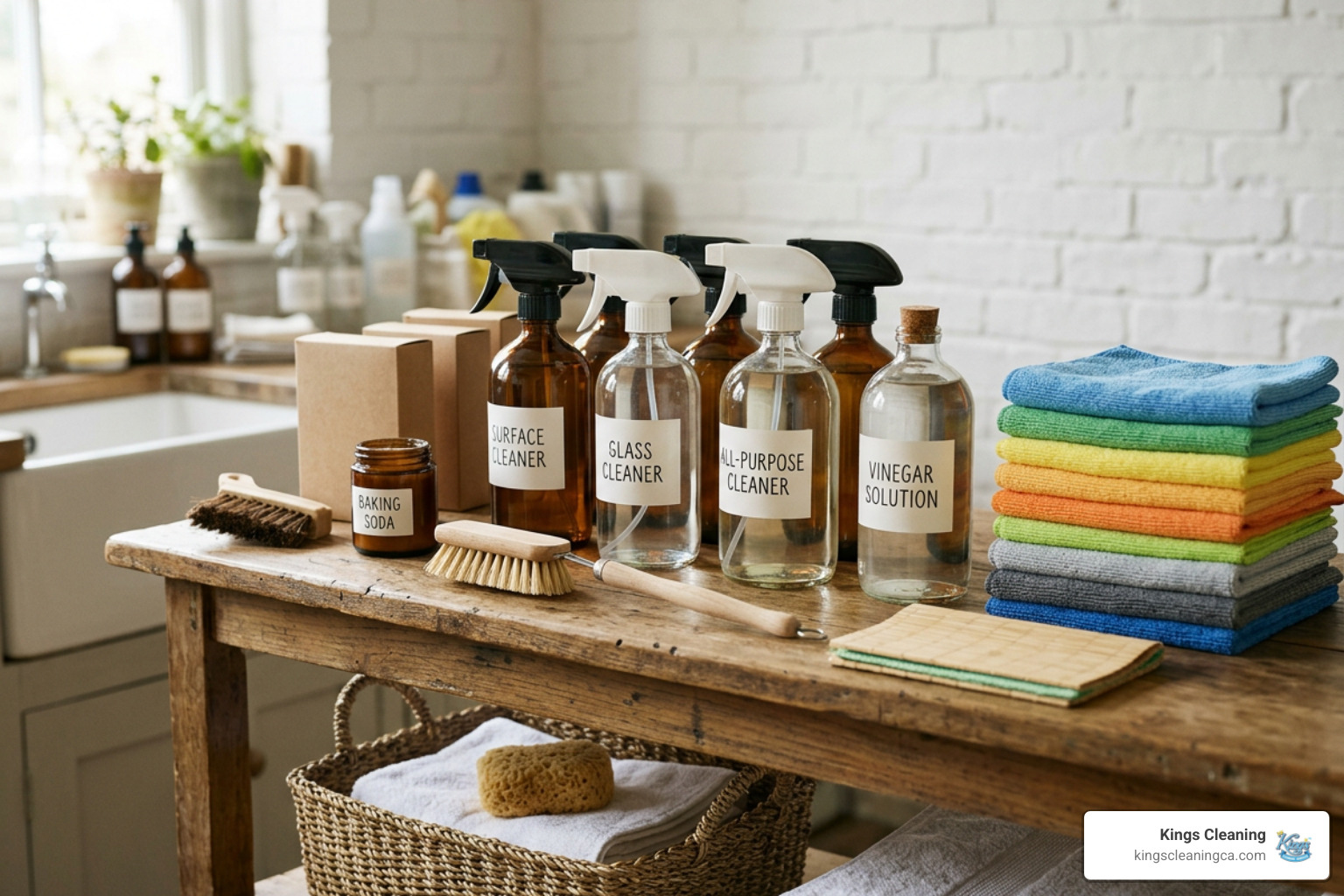
- Color-Coded Microfiber Cloths: Use blue for glass, yellow for general surfaces, and red/pink exclusively for bathroom sanitization to prevent cross-contamination.
- HEPA-Filter Vacuum: Equipped with a crevice tool, dusting brush, and upholstery attachment.
- Extendable Duster: Essential for high ceiling corners, HVAC return grilles, and ceiling fans.
- Detail Brushes & Toothpicks: Old toothbrushes or wooden skewers work wonders to lift grime out of faucet seams, sliding tracks, and toilet mounting bolts.
- Rubber Window Squeegee: Keeps glass shower panels and window panes streak-free.
Effective Homemade Solutions
- All-Purpose 1:1 Vinegar Spray: Combine equal parts distilled white vinegar and warm water in a spray bottle. Add 5–10 drops of essential oil (like lemon or tea tree) to soften the scent. This natural acid cuts through hard water marks, window grime, and soap film on non-stone surfaces.
- Baking Soda Heavy-Duty Scrub Paste: Mix baking soda with a splash of liquid dish soap and water until it reaches the consistency of wet sand. This mild abrasive lifts baked-on oven grease, brightens sink basins, and lifts grout discoloration without scratching porcelain.
- Hydrogen Peroxide (3%): A fantastic natural disinfectant and mild bleaching agent for brightening discolored white silicone seals and eliminating mold spots.
Mastering these tools alongside advanced deep cleaning techniques ensures you remove built-up grime safely without scratching delicate fixtures.
The Room-by-Room Apartment Deep Cleaning Checklist
A systematic, room-by-room approach prevents you from circling back over spaces you have already sanitized. If you want a digital or printable version to carry room to room, you can reference this Apartment Deep Cleaning Checklist (Interactive & Printable) .
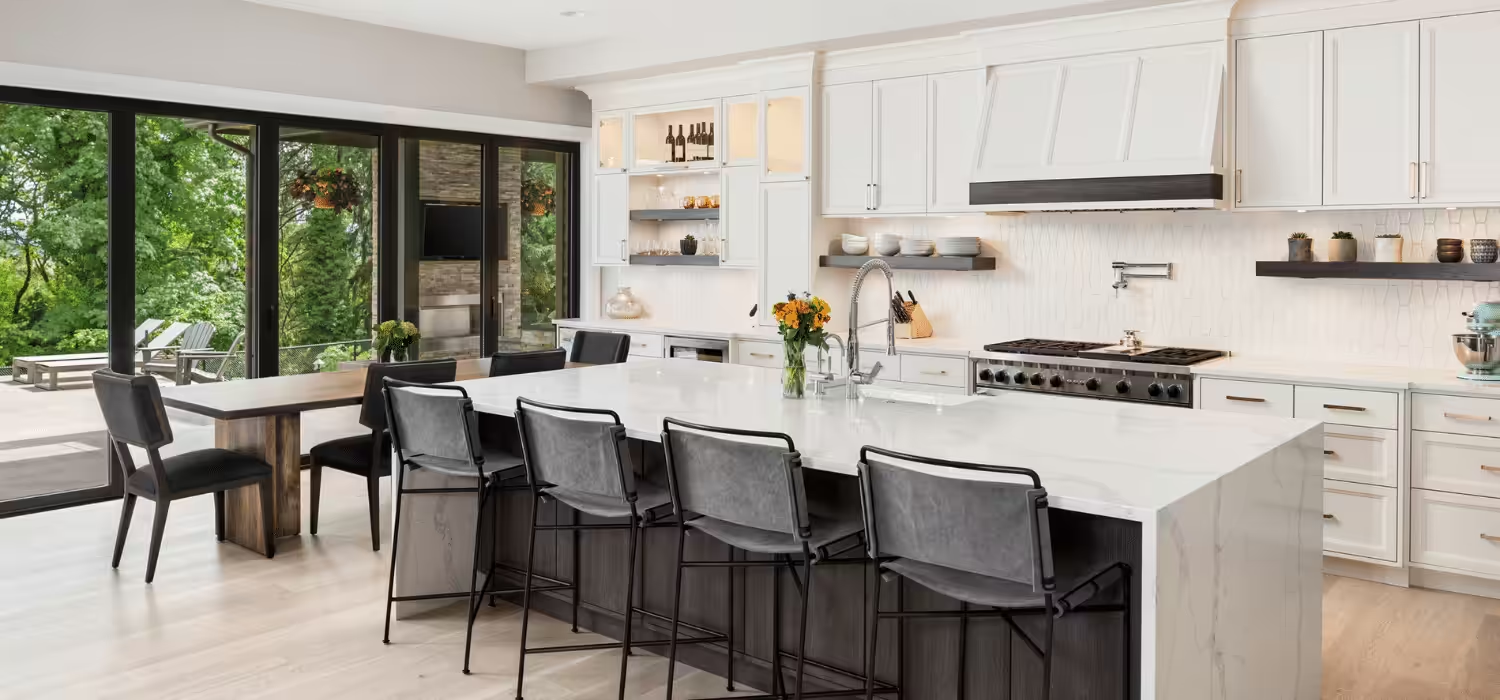
Kitchen and Bathroom Apartment Deep Cleaning Checklist
Kitchens and bathrooms harbor the heaviest biological and grease buildup. Give chemical solutions 10 to 15 minutes of dwell time to dissolve grime before scrubbing.
Kitchen Checklist:
- Range Hood Filters: Pop out metal mesh grease filters and soak them in boiling water mixed with heavy-duty dish soap and 1/4 cup of baking soda for 20 minutes before rinsing.
- Oven Interior & Racks: Remove racks to scrub separately. Coat the interior with baking soda paste (avoiding heating elements) or oven cleaner, let sit, and wipe clean.
- Refrigerator & Condenser Coils: Discard expired condiments, wash removable bins in warm soapy water, and gently vacuum dust off the rear condenser coils to improve cooling efficiency.
- Dishwasher Sanitization: Pull out and rinse the bottom drain filter. Place a cup of white vinegar on the top rack, run a hot cycle, followed by a light sprinkle of baking soda across the bottom for a second quick cycle.
- Sink Basin & Drain: Coat the wet sink with baking soda, scrub down toward the drain, and flush with hot water. Freshen the disposal by grinding ice cubes and lemon peel wedges.
- Cabinet Fronts: Wipe away airborne cooking oils with a warm microfiber towel dampened with a mild degreaser or dish soap solution.
Bathroom Checklist:
- Showerhead Descaling: Fill a plastic bag with equal parts warm water and white vinegar, submerge the showerhead, secure it with a rubber band, and let it soak for several hours to dissolve mineral crust.
- Grout & Tile Scrub: Apply a baking soda paste to discolored grout lines, scrub with a stiff grout brush, and rinse.
- Glass Doors & Soap Scum: Dissolve cloudy calcium deposits with vinegar spray and squeegee the glass dry.
- Toilet Base & Hinges: Spray disinfectant completely around the back base, bolt caps, and under the seat hinges where odors linger, detailing seams with a small brush.
- Exhaust Fan Grille: Vacuum built-up lint from the bathroom exhaust grille to maintain proper moisture extraction and prevent mold growth.
Living Space and Bedroom Apartment Deep Cleaning Checklist
Living and sleeping areas accumulate heavy concentrations of skin cells, dander, and fabric dust. Setting up a plan to maintain consistently clean home environments begins with refreshing these soft surfaces:
- Mattress Refresh & Rotation: Strip all bedding, sprinkle baking soda across the bare mattress, allow it to absorb odors for at least 1 hour, vacuum thoroughly using an upholstery tool, and rotate the mattress 180 degrees.
- Bedding & Pillows: Wash duvet covers, mattress protectors, and bed pillows according to care tags.
- Under-Bed Clearout: Pull out all storage bins and vacuum dust bunnies from the floor, baseboards, and bed frame joints.
- Upholstery Seams: Remove sofa cushions to vacuum deep into corners, crevices, and fabric seams where crumbs collect.
- Electronics & Entertainment Units: Dust TV screens with a dry microfiber cloth (never spray cleaners directly on screens). Vacuum vents on game consoles, streaming boxes, and power strips.
- Ceiling Fan Blades: Slide an old pillowcase over each blade and pull it back to trap falling dust inside the fabric rather than letting it scatter onto the floor.
- Baseboard Heaters & Radiators: Vacuum internal dust out of electric baseboard heating fins to eliminate burning dust smells when heat turns on.
Balconies, Windows, and Entryway Zones
Exterior and transitional zones are frequently forgotten, yet they directly impact indoor air quality and cleanliness. Follow structured cleaning checklists to ensure these perimeter zones are properly addressed:
- Sliding Door & Window Tracks: Vacuum loose dirt with a crevice tool. Spray tracks with warm soapy water, loosen stubborn corners using a cotton swab or detail brush, and wipe completely dry.
- Balcony Sweep & Drain Check: Sweep away leaves and fine dust from balcony surfaces. Check that the floor drain is clear of debris to prevent patio flooding during heavy rain.
- Window Panes & Sills: Wash interior window glass and dry immediately with a clean microfiber cloth to avoid streaks. Wipe down window sashes and wood sills.
- High-Touch Surface Disinfection: Disinfect front door handles, deadbolts, light switch wall plates, intercom buttons, and smart thermostat screens.
- Entryway Threshold & Shoe Storage: Clean outdoor grit from floor mats, wipe down shoe racks, and spray non-toxic odor neutralizers in entry closets.
7 Neglected Dirt Traps Landlords Check During Inspections
When moving out or undergoing a lease renewal inspection, property managers look beyond surface tidiness. You can review a Condo Deep Clean Checklist v3 0 or our comprehensive move out cleaning standards to see how inspectors grade these key areas:
- HVAC Return Air Grilles & Filters: Thick layers of gray dust clinging to return slats signal poor maintenance and can trigger maintenance fees.
- Dishwasher & Washing Machine Rubber Gaskets: Pull back the flexible rubber door seals to wipe away trapped black sludge, mold, and stagnant water residue.
- The Floor and Wall Behind the Refrigerator: Pulling appliances out reveals grease pools, pet fur, and dropped food items that attract pests.
- Range Hood Underside & Light Lens: Cooking oils coat the underside of the microwave or range hood, turning clear light covers sticky and yellow.
- Interior Window Sills & Latches: Rain condensation mixed with outdoor dust creates grime rings in window sills and lock mechanisms.
- Baseboard Dust and Scuff Marks: Dirt lines along the top edge of baseboards and dark scuffs near high-traffic corners stand out during final walkthroughs.
- Switch Plates and Door Frames: Grimy handprints around light switches, interior door frames, and closet handles are immediate red flags on move-out inspections.
Frequently Asked Questions About Deep Cleaning Apartments
Have questions about managing your deep clean? Review our detailed FAQs for additional tenant advice.
How long does a full apartment deep clean take?
For a single person working alone, a studio apartment takes roughly 5 to 7 hours, a 1-bedroom unit requires 7 to 9 hours, and a 2-bedroom home typically takes a full day (8 to 10+ hours). A professional two-person cleaning crew can complete the same tasks in approximately half that time due to efficient parallel zoning.
How often should an apartment receive a deep clean?
Most apartments benefit from a comprehensive deep clean every three months (quarterly). If you have indoor pets, cook frequently with oils, or share an apartment with multiple roommates, monthly deep clean resets help keep dirt and grease under control.
What is the best order to deep clean an apartment?
Always clean from the highest surfaces down to the floor, and tackle dry tasks (dusting, sweeping, vacuuming) before applying wet cleaners or mops. Apply heavy degreasers and descaling solutions early so they can dwell while you handle dry dusting. Complete rooms one by one, finishing with the entryway floor as you exit.
Professional Deep Cleaning vs. DIY: Maximizing Your Deposit
Deciding whether to tackle a deep clean yourself or hire a professional service comes down to time, physical effort, and the financial stakes of your security deposit.
DIY deep cleaning saves upfront money, but it requires an entire weekend of intense physical labor, specialized tools, and trips to buy cleaning supplies. If you miss key inspection hotspots like oven glass interiors, limescale-crusted shower tracks, or dishwasher filters, property managers often deduct costly cleaning fees straight from your deposit.
Hiring a professional team provides commercial-grade equipment, specialized stain removers, and systematic efficiency. At Kings Cleaning, our vetted, insured W-2 staff takes the stress out of turnover and seasonal maintenance across Roseville, CA, and surrounding communities including Rocklin, Granite Bay, Lincoln, Folsom, and Citrus Heights. We operate with flexible scheduling, no long-term contracts, and a 24-hour re-clean guarantee—if an inspector or host isn’t satisfied with a designated spot, we come back and make it right at no extra cost.
If you are preparing for an upcoming inspection or simply want your home to feel brand new again, book our certified Deep Cleaning Services today and let our experienced team handle the heavy lifting.